
Shipping
Lines, billed weight, and what customs expects
Lolobuy ships from a warehouse in Chengdu, Sichuan, and quotes several lines per destination country at different prices and transit windows. This page covers how lines are chosen, the volumetric-weight rule that can matter more than the item's actual weight, and what customs thresholds look like by country.
Compare eligible shipping lines and the final payable quote
The homepage banner advertises "100 logistics routes," and the help centre names several by type — a cosmetics-safe air line, a Europe air line, a US-specific line, and registered air mail among them. In practice, which lines show up for your parcel depends on destination country, weight, and whether the category is restricted (liquids and battery-containing items route onto a narrower set of lines, in some countries down to zero or one option). An automatic coupon has applied to every archived quote we checked — roughly 15 percent below the listed price, floored at a small minimum discount — so the "after coupon" number is the one worth comparing, not the headline price.
Compare the same destination, contents, weight and packing dimensions for every candidate. A coupon in an archived quote is not a discount you can assume at checkout: record the price actually available to your account, plus any optional service you choose. Use the line finder for orientation and the official estimator for the actual parcel.
Use the line finder tool to look up archived prices and transit windows for eleven countries at three weight tiers, pulled from Lolobuy's own estimator.
Volumetric weight: when a light box still costs more
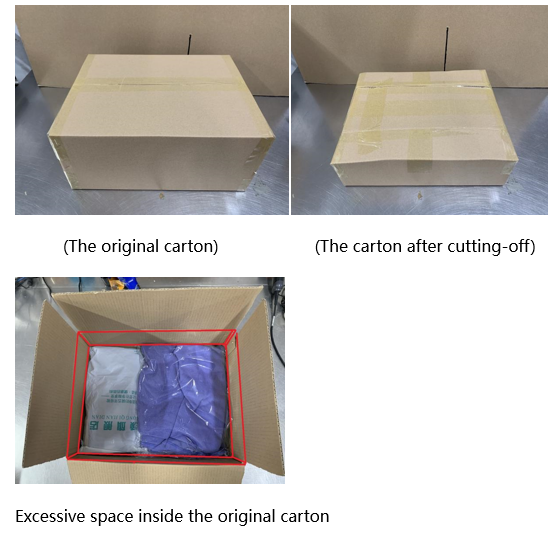
Carriers bill using whichever number comes out higher: the parcel's actual scale weight, or a volumetric weight calculated from its box dimensions. A bulky-but-light item, like a padded jacket in a half-empty box, can end up billed well above what the scale shows. This is also where Lolobuy's own numbers disagree with each other: the live shipping-estimate tool uses a divisor of 8000 for its calculation, while a help-centre article titled "The estimated weight and real weight" gives 6000 for its express line and 5000 for its DHL line. A lower divisor means a heavier billed weight for the same box size, so if your parcel is borderline, the help-centre figures are the more conservative ones to plan around.
Arithmetic example: a 40 × 30 × 20 cm box has a volume of 24,000 cm³. Dividing by 8,000 gives 3 kg; by 6,000 gives 4 kg; by 5,000 gives 4.8 kg. These are comparison scenarios, not a choice of whichever result is cheaper. Confirm the divisor and rounding rule for the eligible line, then compare with scale weight.
Cutting an oversized shipping carton down to the item's actual size is a normal, encouraged step — Lolobuy's own packaging guide shows the difference directly.
Customs and declared value
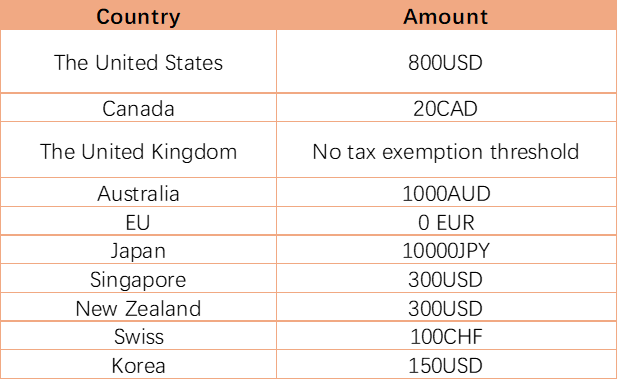
Lolobuy’s archived tax-threshold table is historical agent guidance, not a current customs ruling or a guarantee that a parcel will avoid charges. The amount payable depends on the destination’s current requirements and the chosen route’s tax handling. Before submitting a parcel, confirm how that route collects tax and what accurate value and supporting documents it requires. Do not choose a declaration value to fit an old threshold.
Optional "ShipCare" protection — 5 to 6% of merchandise plus shipping cost — covers loss, damage, customs seizure, and delivery delay, each with its own claim conditions; see the excerpt on the costs page for what is and is not covered.